Call volume hides call quality
A dashboard can show that the phone rang without showing why high-intent callers failed to convert.
Move beyond call counts and attribution. Understand why qualified callers book, hesitate, choose a competitor, or leave without a clear next step.
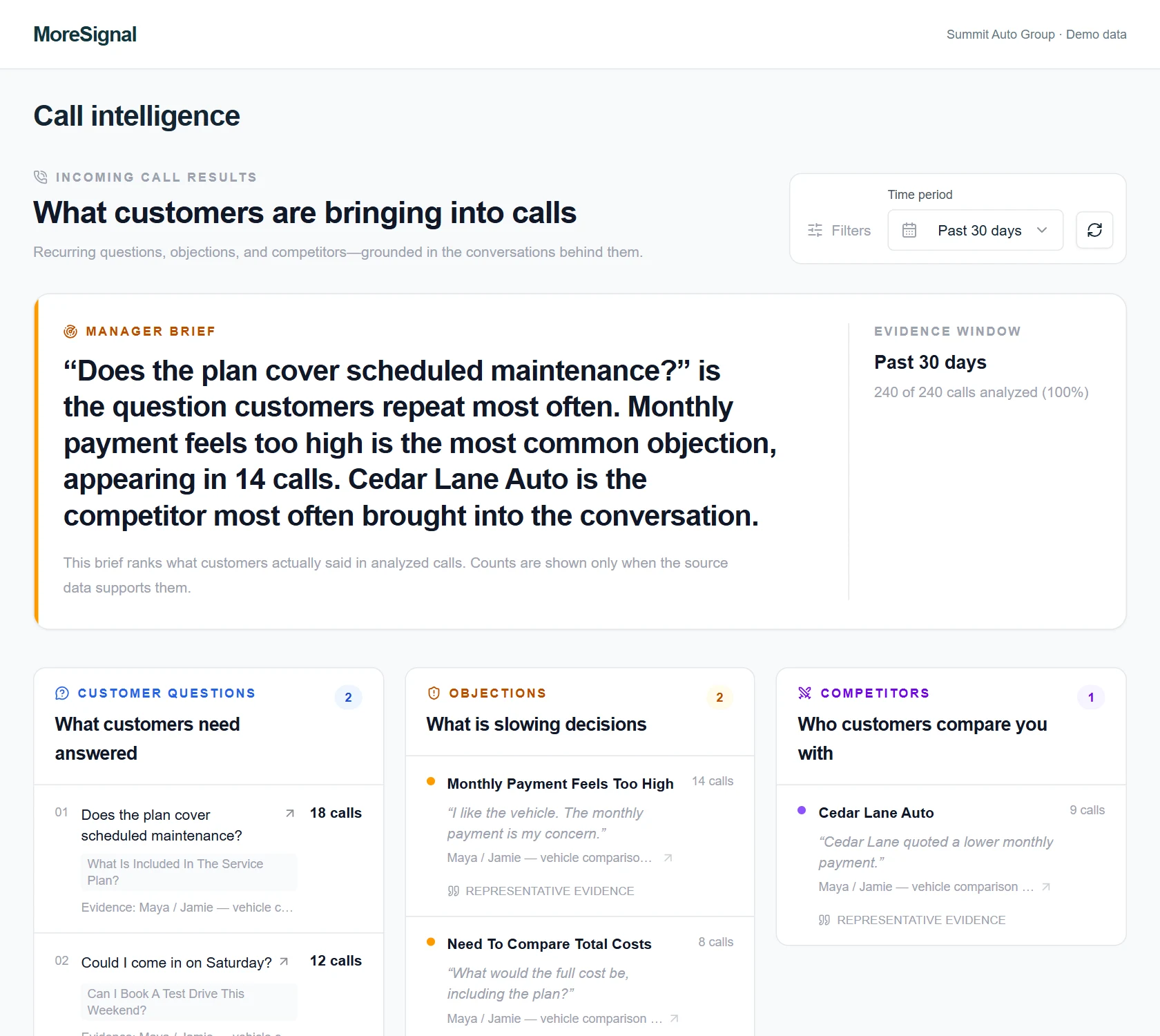
Examples of what a manager might notice and coach. These are illustrative scenarios, not customer results.
Financing mentioned in 18 calls
Only five callers received a financing option after raising payment concerns.
Update the response standard and coach the missed calls first.
After-hours demand increased
Emergency-service questions appeared more often than the previous period.
Review coverage, messaging, and the follow-up path for after-hours callers.
Nine qualified calls had no appointment
Timing and fit were discussed, but no specific day or time was offered.
Route the calls for follow-up and coach a two-option appointment ask.
What needs to improve
Revenue leaders, sales managers, and operators responsible for converting inbound phone demand into appointments or qualified opportunities.
A dashboard can show that the phone rang without showing why high-intent callers failed to convert.
Questions, competitor mentions, and emerging demand stay scattered across recordings instead of improving the sales process.
Qualified callers leave without a meeting or task because the opportunity is buried in a recording nobody reviews.
How it works
1. Collect
Bring recordings and transcripts from supported phone, meeting, and workflow sources into the same system.
2. Surface
Identify buyer questions, objections, competitors, demand themes, outcomes, and calls that need attention.
3. Act
Open the exact supporting moments, route follow-up, coach the behavior, and adjust the process.
In the product
Find qualified intent that ended without a booked appointment, explicit owner, or dated next step.
See what buyers repeatedly ask and where current talk tracks fail to resolve the underlying concern.
Surface competitor mentions with their surrounding context rather than counting names without meaning.
Move from a summarized insight to the call moments behind it so managers can verify and respond.
Connected tools
Put the standard to work
Questions
Call tracking focuses on routing, attribution, and activity. Inbound call intelligence focuses on what buyers said, what happened in the conversation, and what should happen next.
Yes. Insights link back to the relevant calls and conversation evidence so a manager can inspect the basis for the finding.
Yes. Teams can identify calls where interest and fit were present but a specific appointment or next step was never secured.
Bring one real coaching question
Explore the plans, or book a free 20-call review to find a useful coaching priority for your team.