Customer language stays scattered
One seller hears a pricing concern and another hears a product-fit question, but the pattern never reaches the person who owns the playbook.
Replace assumptions and isolated anecdotes with repeated signals from real customer conversations, then turn those signals into specific changes sellers can use.
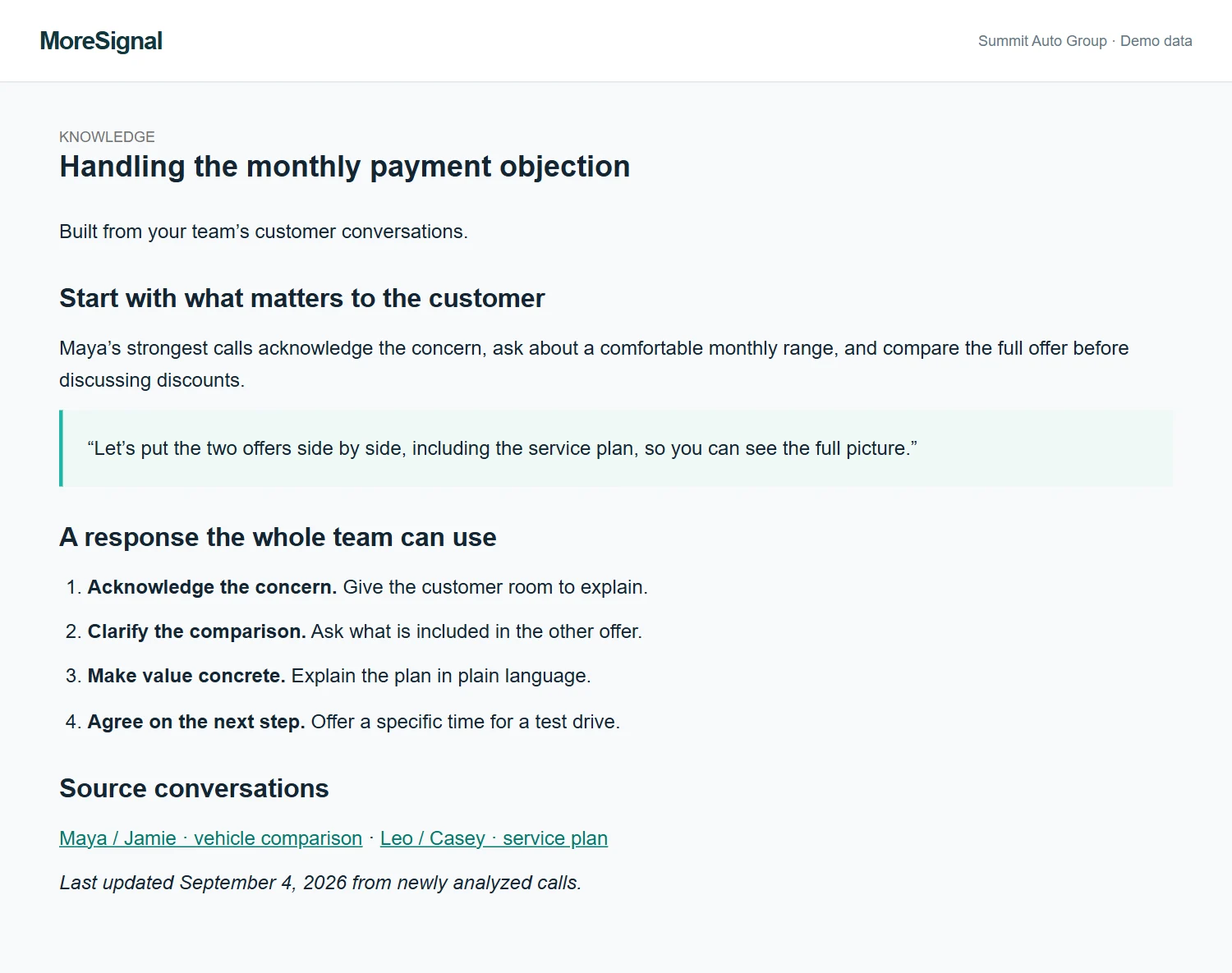
Examples of what a manager might notice and coach. These are illustrative scenarios, not customer results.
Parking concerns repeat across SUV calls
Customers like the vehicle but hesitate because they cannot picture using it confidently in their daily environment.
Add a practical size comparison and parking-confidence question before the test drive.
Payment questions appear before value is clear
Sellers quote a number before confirming budget, ownership goals, mileage, or the comparison the customer is making.
Move two diagnostic questions ahead of the payment explanation.
Availability questions slow inbound callers
Customers want confirmation before investing time in a visit, but the current response leaves inventory status ambiguous.
Define a clear availability check and an owned follow-up when confirmation is not immediate.
What needs to improve
Revenue leaders, sales enablement teams, and hands-on managers responsible for keeping scripts, talk tracks, discovery, and objection handling current.
One seller hears a pricing concern and another hears a product-fit question, but the pattern never reaches the person who owns the playbook.
Teams repeat inherited responses without checking whether the answer resolves the customer's real concern or creates more friction.
A revised script may sound better internally while managers still lack evidence that sellers use it or that customer responses improve.
How it works
1. Listen
Surface repeated questions, objections, competitor mentions, decision criteria, and moments where buyer confidence changes.
2. Change
Update discovery prompts, proof points, objection responses, and next-step language around the evidence that appears across calls.
3. Validate
Use the rubric and later conversations to see whether sellers adopt the change and whether the original friction continues.
In the product
Rank what customers repeatedly need answered so messaging and seller preparation reflect current demand.
Inspect the language before and after an objection instead of treating every mention of price, timing, or competition as the same issue.
Find repeatable questions, explanations, and next-step sequences that appear in strong calls without turning one anecdote into a rule.
Score the observable parts of an updated process and keep supporting call moments available for manager review.
Connected tools
Put the standard to work
Questions
Yes. It can surface and rank repeated objections with links back to the relevant conversation evidence for human review.
The patterns show where customers need a clearer question, explanation, proof point, or next step. Teams decide what to change, then use later calls to inspect adoption.
Rubrics and scoring guidance can represent the observable parts of the playbook so managers can compare the intended process with real call evidence.
Bring one real coaching question
Explore the plans, or book a free 20-call review to find a useful coaching priority for your team.